
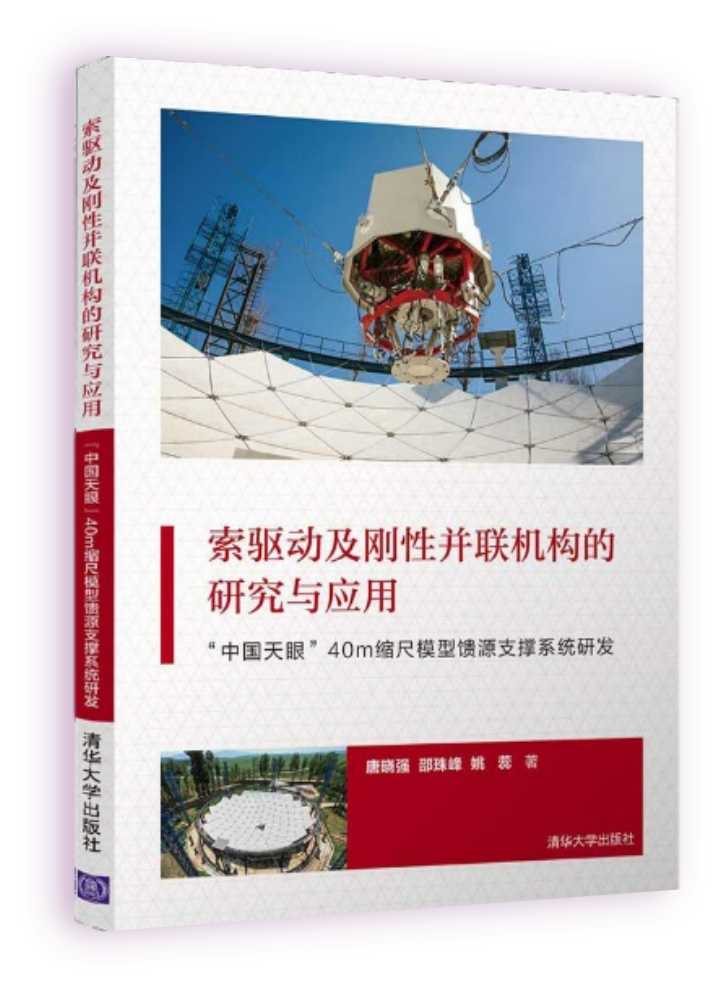
REFERENCE 01
索驱动及刚性并联机构的研究与应用
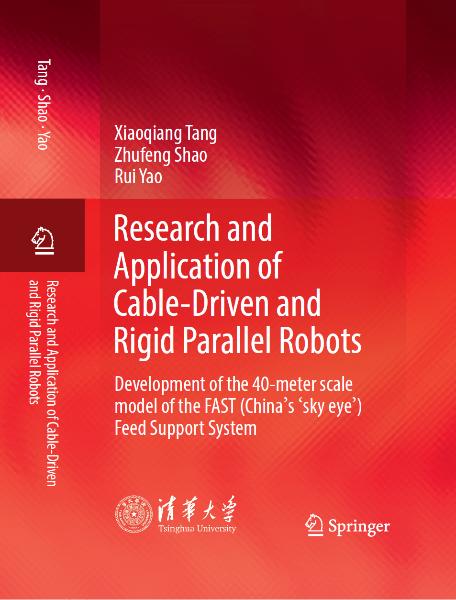
围绕索驱动及刚性并联机构的基础理论、分析方法及工程应用展开系统论述。
Research
围绕索驱机器人机构设计、建模分析与运动控制等关键问题,开展索驱机器人基础理论、方法与系统研究。
研究工作面向大空间、高负载、轻量化机器人系统需求,关注机构构型、机器人建模、动力学特性以及多索协调运动控制等基础问题,并结合实际机器人系统开展实验验证。
Research Areas
从机构设计、系统建模到运动控制,形成索驱机器人研究的基础技术链条。
01 / Research Area
Mechanism & Configuration Design
围绕不同工作空间、负载能力和运动性能需求,研究索驱机器人的机构构型、索系布局与结构参数设计,为机器人系统的运动能力和工程实现提供基础。
Research Focus
02 / Research Area
Modeling & Dynamics
围绕索驱机器人运动与受力特性,开展运动学、动力学及相关系统建模研究,为机构分析、性能评估和控制方法研究提供模型基础。
Research Focus
03 / Research Area
Motion Control & Coordination
围绕多根绳索协同驱动条件下的机器人运动控制问题,研究轨迹运动、多索协调与系统运行控制方法,提高索驱机器人在实际任务中的运动稳定性与可控性。
Research Focus
Research Foundations
索驱机器人研究建立在并联机器人理论、机构学、机器人动力学、运动控制与工程装备研究等基础之上。
REFERENCE 01
围绕索驱动及刚性并联机构的基础理论、分析方法及工程应用展开系统论述。
REFERENCE 02
系统介绍索驱动与刚性并联机器人的理论、设计方法及相关工程应用。
Selected Research Topics
围绕索驱并联机器人机构设计、建模分析、性能评价、优化设计与控制等关键问题,团队形成了若干具有代表性的研究专题与研究成果。
01 / RESEARCH EXAMPLE
Rigid-Flexible Coupled Dynamics Modeling
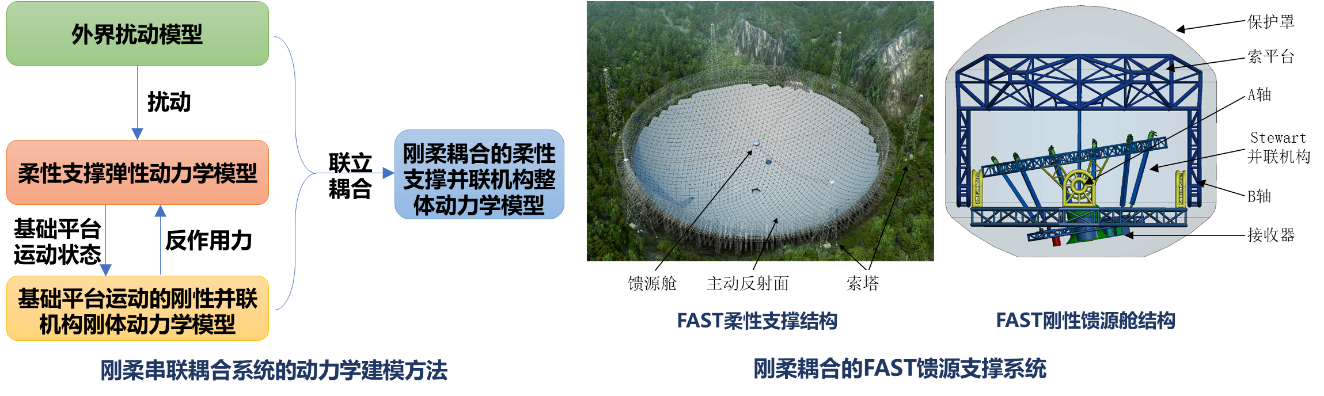
柔性支撑并联机构中,柔性支撑与刚性并联机构呈串联耦合,传统针对单一刚性或柔性系统的动力学建模方法难以直接适用。
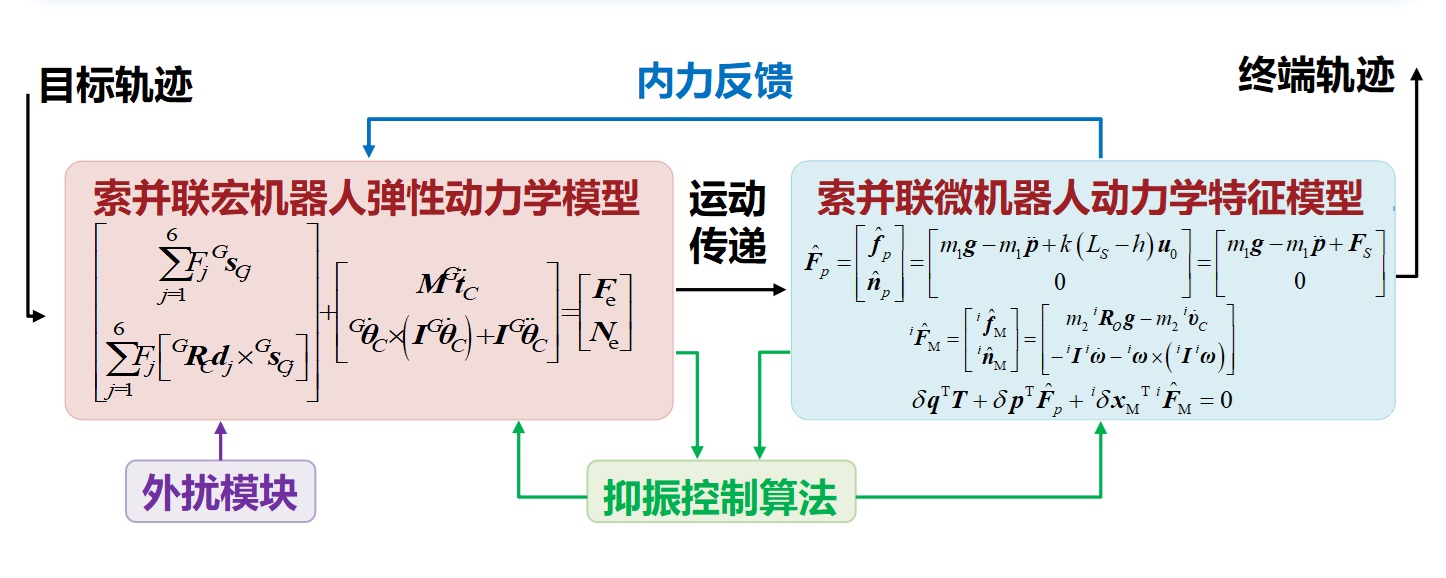
研究分别建立柔性支撑弹性动力学模型、基础平台运动的刚性并联机构动力学模型以及外界扰动模型,并将各分离模型联立,形成刚柔串联耦合系统的整体动力学模型。
该模型用于揭示柔性支撑与刚性并联机构之间运动与力的相互作用,并已在 FAST 1:15 完整运动学缩尺模型相关研究中应用。
代表性论文
Dynamic modeling and wind vibration control of the feed support system in FAST
Driving force analysis for the secondary adjustable system in FAST
02 / RESEARCH EXAMPLE
Kinematic Performance Evaluation Based on Orthogonal Degree
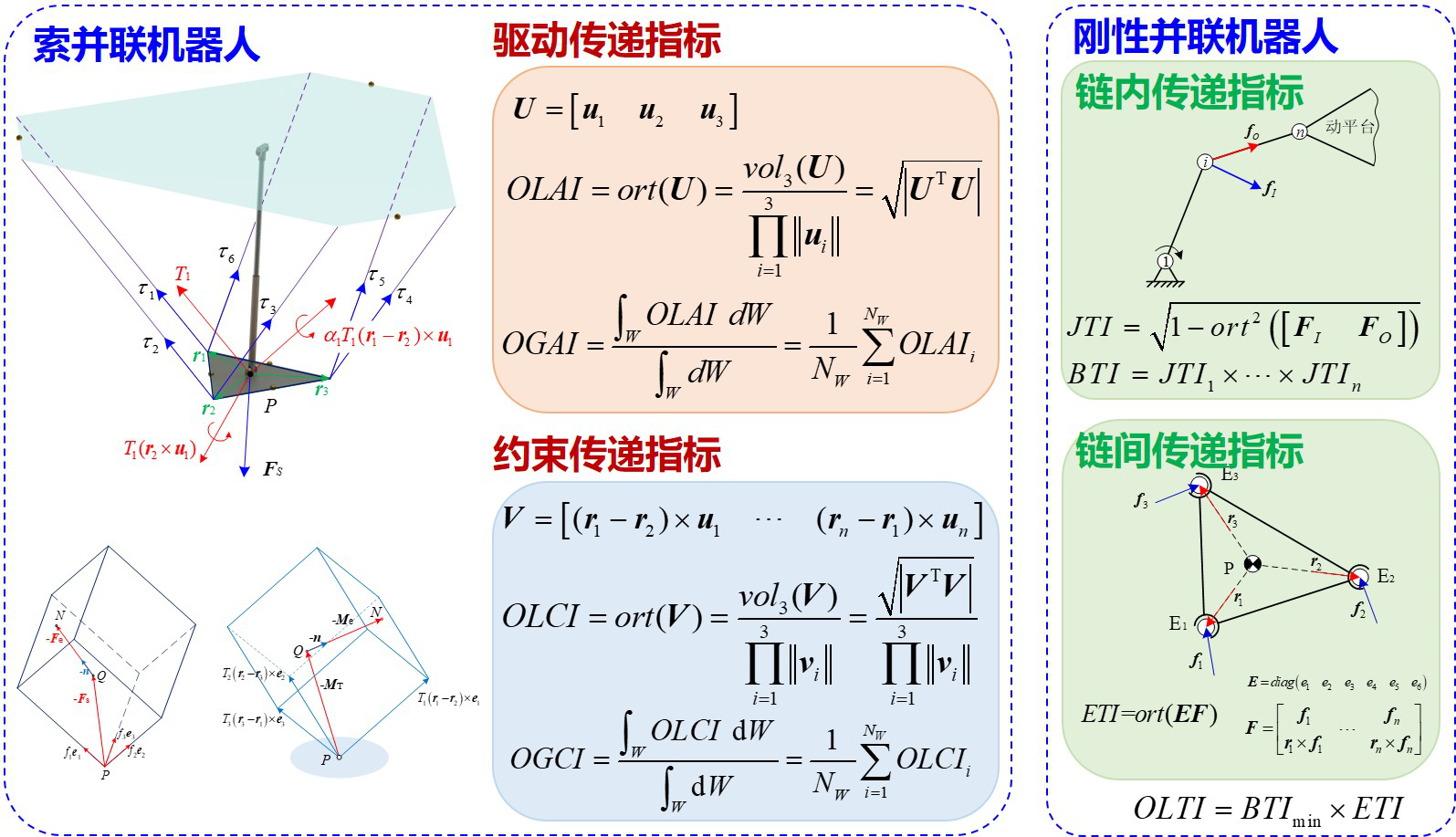
运动学性能指标是并联与索驱机构优化设计的重要依据。并联机构本质上是将关节驱动力向终端进行力传递与约束的过程。
基于欧氏空间矩阵正交度,分析索并联机器人驱动力与约束力的传递,以及刚性并联机构链内与链间力传递特性,建立局部与全局力传递性能评价指标。
指标与坐标系无关、取值范围为 0~1,可用于性能分析、奇异性判断、尺度优化与构型优选。
代表性论文
Transmission Index Research of Parallel Manipulators Based on Matrix Orthogonal Degree
Improving the kinematic performance of a planar 3-RRR parallel manipulator through actuation mode conversion
Analysis and optimization of a novel planar 5R parallel mechanism with variable actuation modes
Optimization and implementation of a high-speed 3-DOFs translational cable-driven parallel robot
03 / RESEARCH EXAMPLE
Dynamic Performance Evaluation Based on Equivalent Inertia
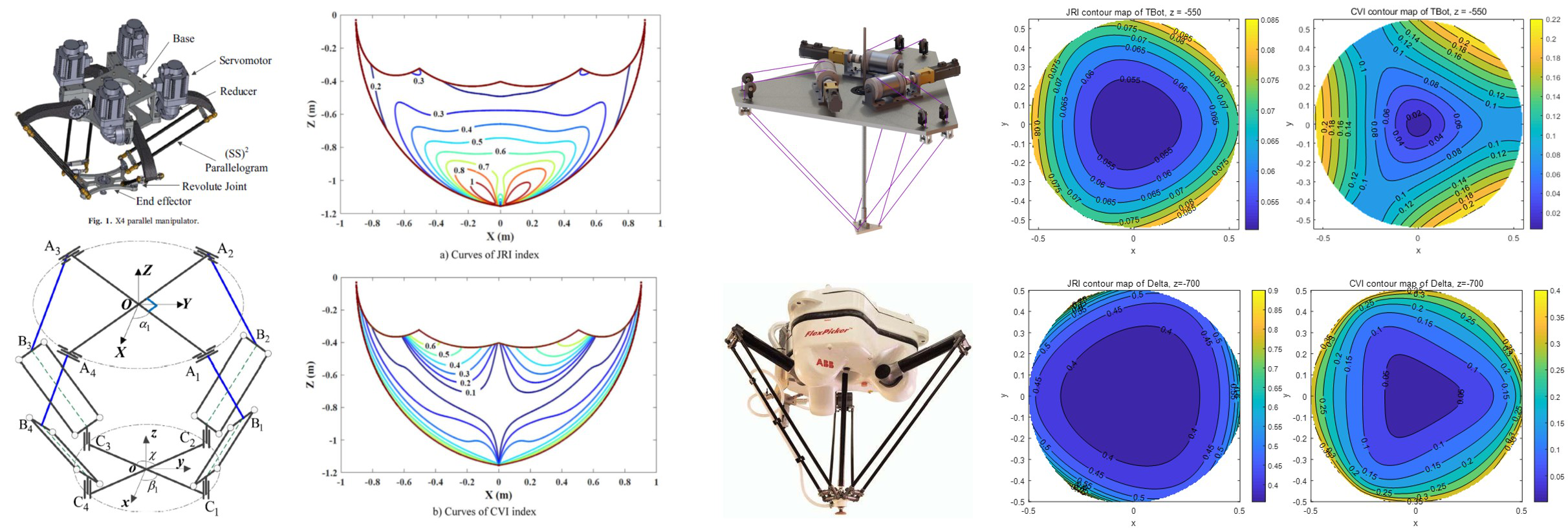
惯量决定机器人动态特性,也是驱动系统选型的重要依据。并联机器人惯量以矩阵形式存在于机构中。
构建量纲统一的关节空间惯量矩阵,提出关节映射等效惯量(JRI)与惯量变异系数(CVI),建立局部及全局动力学性能评价指标。
据此分析加速能力、动态响应与机械振动频率,建立惯量匹配准则,为驱动系统匹配与动态性能提升提供依据。
代表性论文
Dynamic performance analysis of the X4 high-speed pick-and-place parallel robot
Research on the inertia matching of the Stewart parallel manipulator
Inertia Match of a 3-RRR Reconfigurable Planar Parallel Manipulator
04 / RESEARCH EXAMPLE
Integrated Optimization Design Method
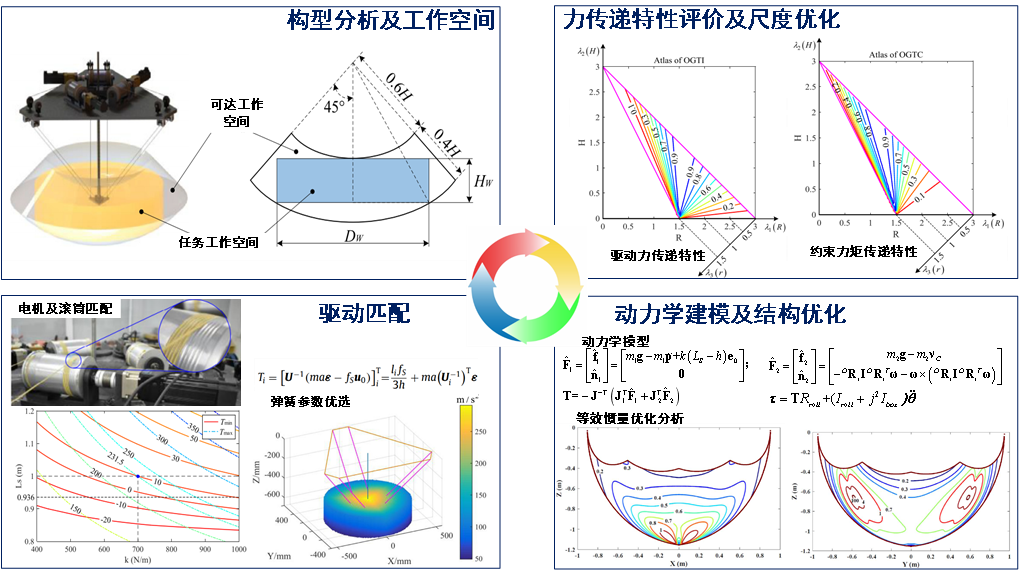
面向索驱与并联机器人,开展“尺度-结构-驱动”一体化综合优化设计。
尺度层面:基于矩阵正交度力传递性能指标,结合性能图谱与非线性优化完成尺度优选。结构层面:结合三维虚拟样机、关节映射惯量与惯量变异系数等动力学指标,确定尺寸与机械结构。
驱动层面:依据惯量匹配准则,综合功耗、扭矩与速度要求,完成伺服电机与传动链匹配。
代表性论文
Optimization and implementation of a high-speed 3-DOFs translational cable-driven parallel robot
Workspace Analysis and Optimal Design of a Translational Cable-Driven Parallel Robot with Passive Springs
Kinematic performance analysis and promotion of a spatial 3-RPaS parallel manipulator with multiple actuation modes
Atlas Based Kinematic Optimum Design of the Stewart Parallel Manipulator
05 / RESEARCH EXAMPLE
Vibration Suppression Control Theory
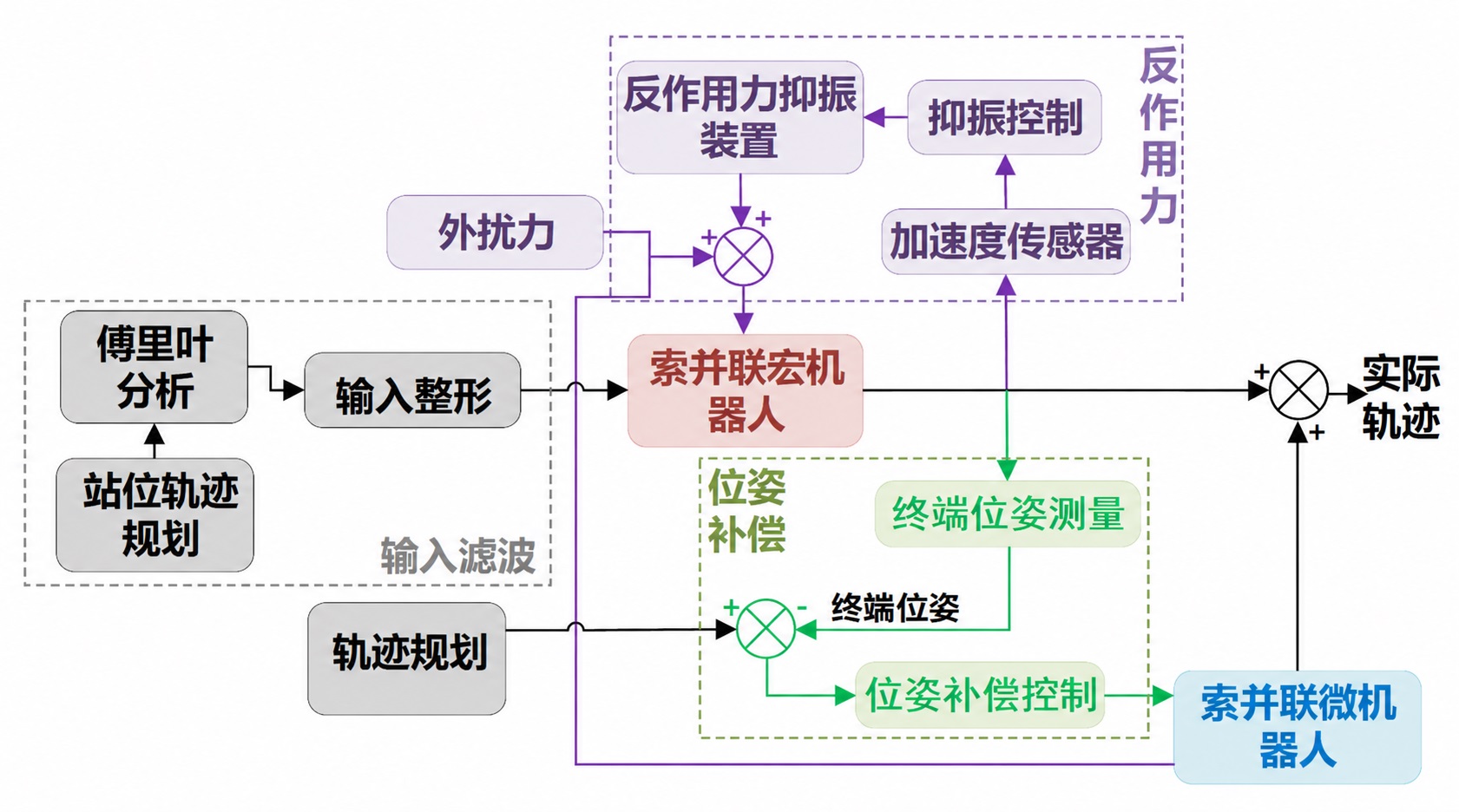
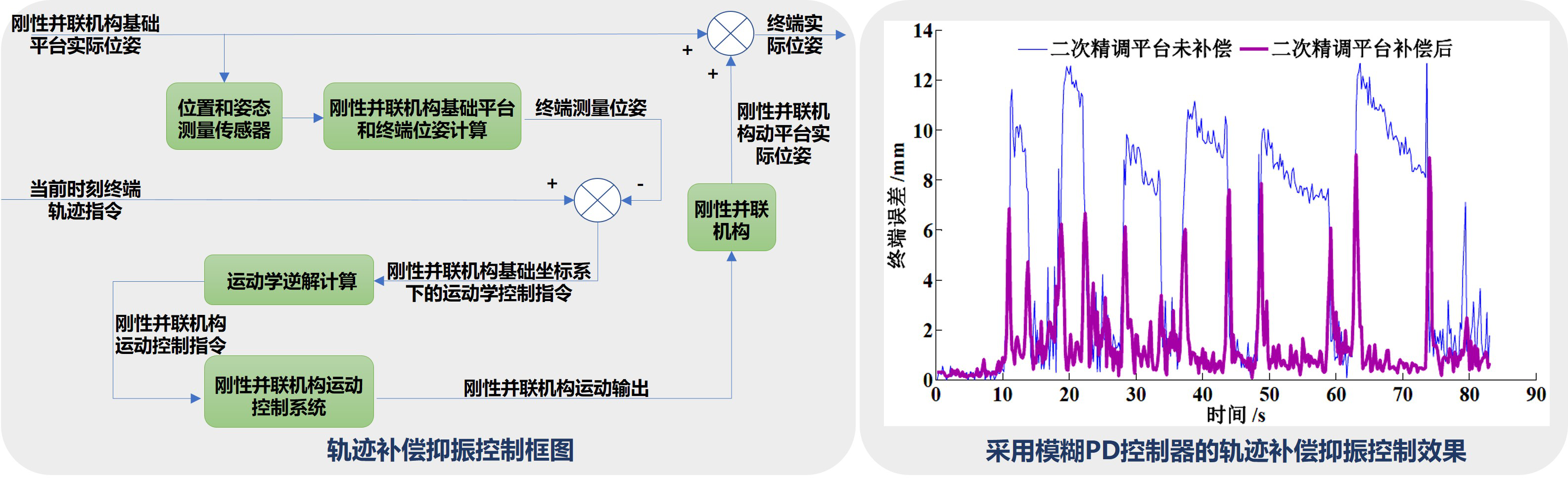
轨迹补偿抑振控制:利用刚性机器人实时补偿柔性支撑振动造成的终端位姿误差;通过非接触式位置传感器测量基础姿态误差,将其转换到刚性机器人关节坐标系,由控制器进行补偿,兼顾终端精度与柔性支撑稳定性。
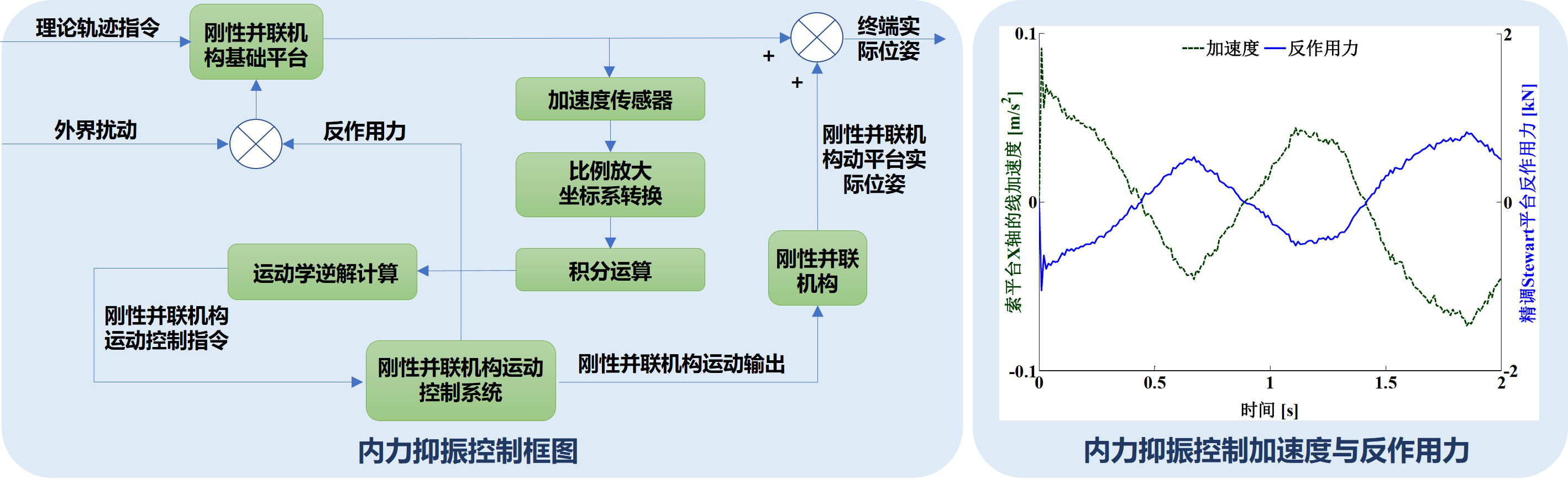
内力抑振控制:利用刚性机器人运动产生的反作用力抵消柔性支撑振动;基于柔性支撑并联机构整体动力学模型,利用加速度等信息估计所需反作用力,控制刚性机器人执行补偿动作,提高系统整体稳定性与终端精度。
上述抑振控制理论已在 FAST 1:15 完整运动学缩尺模型中开展验证和应用。
代表性论文
Dynamic modeling and wind vibration control of the feed support system in FAST
A Fuzzy PID Approach for the Vibration Control of the FSPM
Optimum Design of 3-3 Stewart Platform Considering Inertia Property
FAST馈源支撑系统的终端精度保证研究
06 / RESEARCH EXAMPLE
Actuation and Constraint Performance Analysis of Cable-Driven Parallel Robots
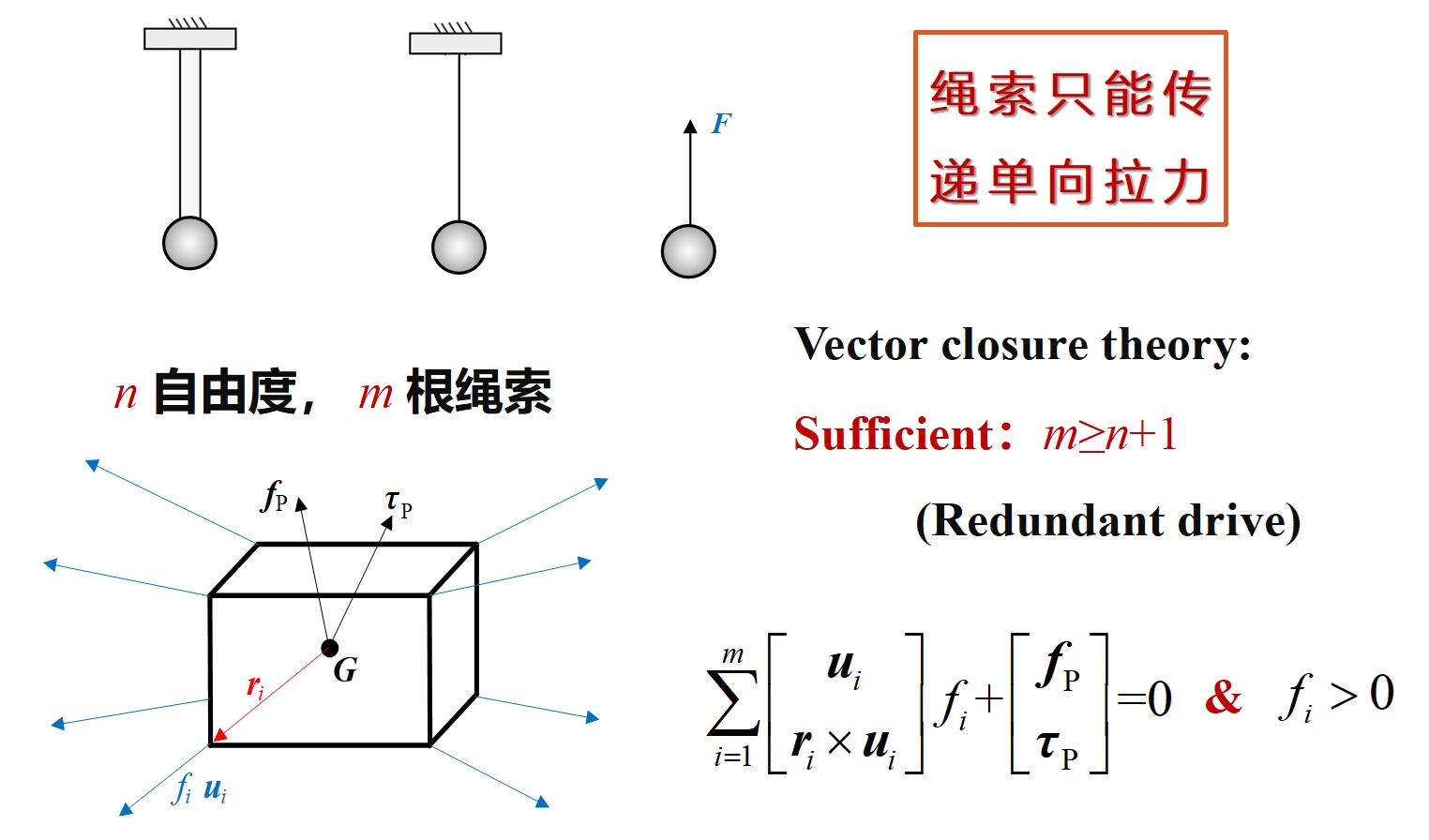
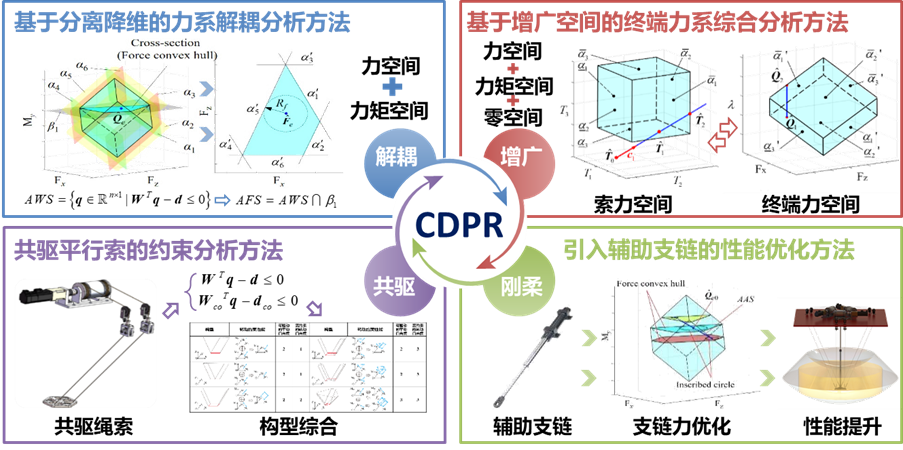
索并联机器人构型及运动分析的基础是索力(Tension)与终端力旋量(Wrench)之间的映射关系。针对这一关系,课题组提出 AWS(Available Wrench Set)分离降维方法,实现力维度和力矩维度的解耦分析,解决传统方法维度耦合、分析结果不够直观的问题。
在此基础上,进一步提出 AWS 增广空间方法,突破传统 AWS 凸包降维及信息丢失问题,提高 AWS 分析的准确性和通用性。
将索并联机器人的运动要求划分到自由度空间与矢量力系空间,通过自由度与约束之间的对偶转换设计刚性支链,并基于矢量封闭原理确定绳索布局,建立“刚柔并联”索机器人构型综合方法,实现高效驱动与有效约束的结合,在简化机器人本体结构的同时丰富索机器人构型形式。
代表性论文
Anti-disturbance performance analysis and tension distribution method for redundant cable-driven parallel robots
Anti-disturbance performance analysis and the innovative design of the FAST fine-tuning platform
Reconfiguration and Performance Evaluation of TBot Cable-Driven Parallel Robot
From Research to Systems
From Research to Robotic Systems
基于索驱机器人在机构设计、动力学建模与运动控制等方向的研究积累,面向大空间作业、高速高精度和复杂应用场景,持续推进关键技术研究与工程转化,发展面向实际应用的索驱机器人系统。
View Technology →